
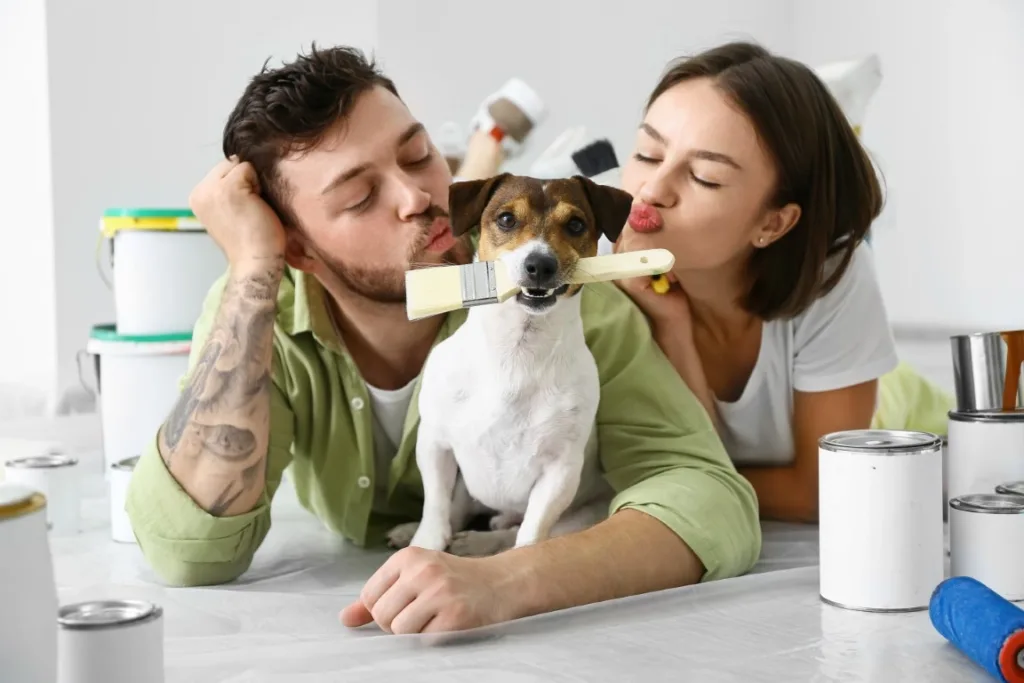
If you have pets, their safety should be a priority in any home painting project. Paint can come with many hazards to your furry friends that you may not have even considered, from VOCs to toxic additives to risk of ingestion. However, with careful preparation and the right products, you can keep your pets safe while making your home more beautiful.
If your home could use a fresh coat of paint, keep reading to learn more about the danger paint can pose to pets, how to choose pet-friendly products, and tips for keeping your pets safe and healthy during and after your next painting project.
What Makes Paint Unsafe for Pets?
You’ve probably heard about volatile organic compounds (VOCs) and how they can affect indoor air quality. But did you know that the VOCs in paint aren’t just dangerous to humans, but pets, as well?
Paint fumes can affect pets more quickly than humans due to their stronger senses of smell, smaller bodies, and the fact that they often spend more time in the house than you do. Like humans, dogs, cats, birds, and other small animals can experience respiratory issues, eye irritation, skin reactions, nausea, dizziness, and fatigue when exposed to a high concentration of VOCs.
Additionally, some older or low-quality paints may have toxic additives and heavy metals that can harm your pet if they come into contact with it, whether it’s getting residue on their paws and fur, tasting a newly painted surface, or ingesting paint chips.
Benefits of Using Pet-Friendly Paint
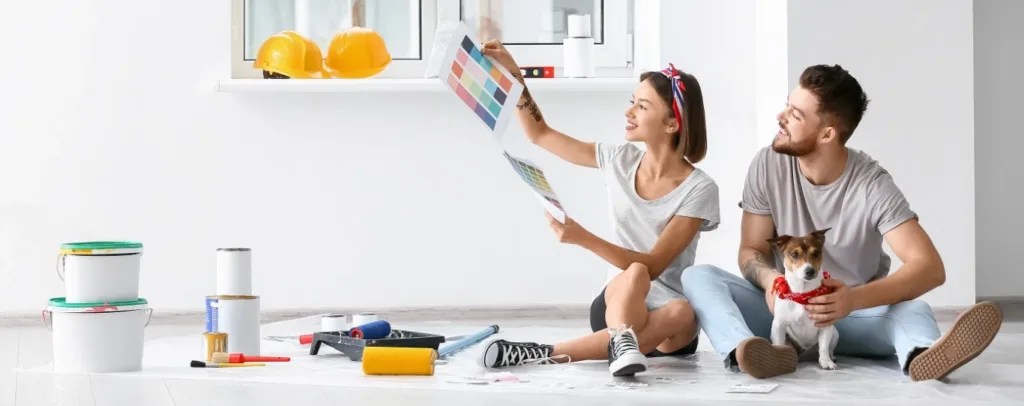
When you use pet-friendly paint products, you’re not just protecting your furry friends — you’re safeguarding the health of your whole household. Low- or zero-VOC paints improve indoor air quality, reduce allergy and asthma triggers, and allow for faster occupancy of rooms after painting. Plus, without toxic additives or heavy metals, it’s better for the environment, as well.
What Makes Paint Pet-Friendly
Look for zero-VOC paint, which has less than five grams of VOCs per liter. If it’s not available, choose low-VOC options, which contain less than 50 grams of VOCs per liter. (If it says “low-odor”, don’t automatically assume it’s low-VOC — always check for VOC information on the packaging.)
It’s also a good idea to opt for water-based paints instead of oil-based paints. While not all water-based paints are pet-friendly, they typically have lower VOCs and are less dangerous if consumed.
While you’re at it, look for Green Seal, GREENGUARD, or MPI Green Performance certifications. Just because a paint has a low concentration of VOCs doesn’t mean it’s pet-friendly (or human-friendly). These certifications let you know which paint products are the safest for all living things.
Paint in pet-friendly homes should also be durable (and washable) enough to withstand scratching, shedding, and muddy paws. Avoid matte finishes, as they’re harder to keep clean. Stick to eggshell, satin, or semi-gloss paint instead.
It’s also a good idea to use mold- and mildew-resistant paint in pet areas so wet fur and potty accidents don’t lead to fungal infestations that put the health of your entire household at risk.
Preparing Your Home and Pets for a Painting Project
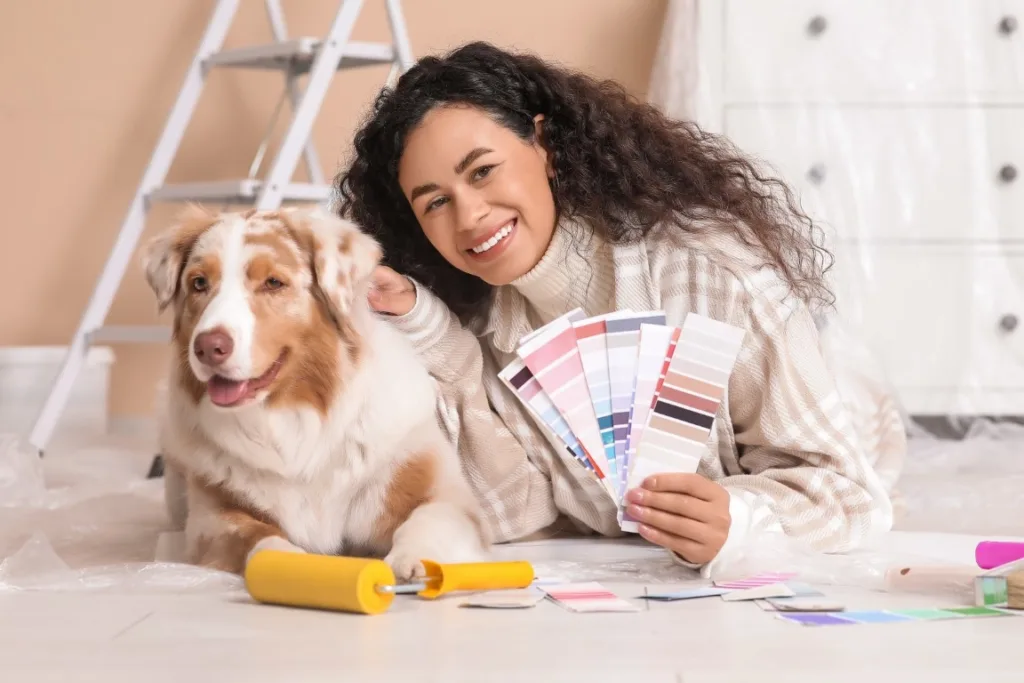
Choosing the right products isn’t the only thing you’ll need to do to ensure your pets’ safety during a painting project. Keep your pets away from danger by blocking their access to the parts of the home being painted. Protect their bedding, bowls, toys, kennels, and litter boxes from drips, spills, and dust. Maintain airflow throughout the home while painting to dispel any VOCs or odors.
After the project, don’t assume that just because the paint is dry that the danger is over. Paint can still give off VOCs months into the future as it completes the curing process, especially without proper ventilation. Open windows and run fans for several days to get rid of any lingering VOCs.
Plus, lingering paint flakes and dust from sanding can be toxic if consumed. Ensure the area is completely clean before allowing your pets back into the room.
How Professional Painters Ensure Pet Safety During a Project
Professional painters like the team at Brush Brothers do everything they can to ensure your home remains pet-friendly, including:
- Proper ventilation strategies during prep, painting, and curing
- Keeping tools, materials, and wet surfaces contained and away from pets
- Following careful clean-up protocols to prevent residue exposure
- Safe storage and disposal of paint products
Pet-Friendly Painting Projects by Brush Brothers
At Brush Brothers, we’re committed to keeping your furry friends safe throughout all stages of the painting process. We can help you select pet-friendly products, keep your home clean while we paint, and give you tips for reducing VOCs in the long-term. Contact us today to get started!